Get a Custom Quote!
Full-flow OEM & ODM from grey cloth to finished garment.
22,100 sqm facility. 2.65M pcs annual capacity.
Reply within 24 hours.
I consent to the processing of personal data and agree with the Privacy Policy.

Every garment begins with a choice of fabric, and that choice shapes everything that follows: how the garment fits, how it feels, how it moves, and how long it lasts. For brands entering the apparel market, understanding the fundamental difference between knitted and woven fabrics is not optional. It is the foundation of good product development.
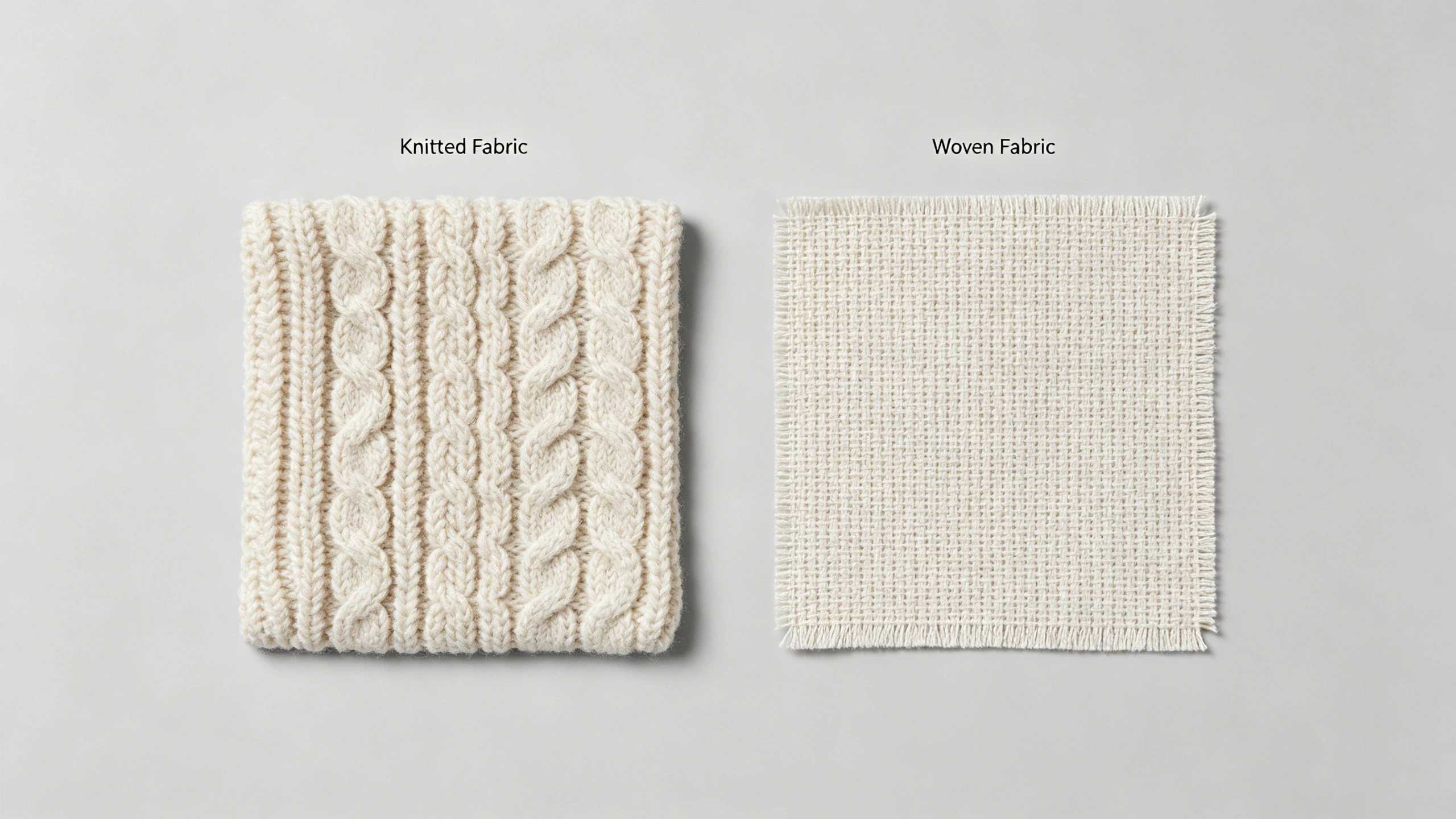
Knitted fabric is created by interlocking loops of yarn, a process that gives the material natural stretch and recovery. This elasticity makes knits ideal for garments that need to move with the body — t-shirts, activewear, loungewear, underwear, and sweaters. At Tai’an Liyuan, knitted apparel is our core specialty. Our sewing lines, equipment, and technical expertise are optimized for the unique challenges of knit manufacturing, from managing fabric roll-off during cutting to controlling seam stretch during sewing.
Woven fabric, by contrast, is made by crossing two sets of yarns perpendicular to each other. This grid-like structure gives woven fabrics stability and structure but very little stretch unless elastane or spandex is added. Woven fabrics are the standard for dress shirts, trousers, jackets, and formalwear — garments that need to hold their shape rather than conform to the body.
The choice between knit and woven depends on the end use of the garment. If your brand focuses on comfort, movement, and casual styling, knits are the natural choice. They drape softly, breathe well, and recover from stretching without permanent distortion. If your brand emphasizes structure, crisp lines, and formal aesthetics, wovens are more appropriate.
From a manufacturing perspective, knits and wovens require different handling. Knitted fabrics are more prone to curling at the edges, which complicates cutting and sewing. They also stretch during stitching, requiring specialized needles, feed mechanisms, and operator techniques to maintain consistent seam lengths. Woven fabrics are more stable but can fray at the cut edges, requiring overlocking or serging to prevent unraveling.
Cost is another consideration. Knitted fabrics are often produced on circular knitting machines that operate at high speed with minimal waste, making them cost-effective for large-volume orders. Woven fabrics typically involve more complex loom setups and may require additional finishing processes such as sanforizing or mercerizing, which add cost.
For brands that are unsure which direction to take, our technical team provides fabric consultation as part of our development process. We can recommend fiber blends, weights, and finishes based on your design intent, target market, and price positioning. Whether you choose knit, woven, or a combination of both, the goal is the same: a garment that performs as promised and satisfies the person who wears it.
Understanding fabric is the first step toward manufacturing success. We are here to help you take that step with confidence.